I market products that are hard to explain and expensive to get wrong.
I've managed campaign execution across two enterprise software business units and written for both retail and institutional audiences at a regulated exchange serving more than 500,000 users.
Across those roles, I've had to learn complicated products quickly, sort through technical and stakeholder input, and turn what matters into marketing the audience can understand.


The problems worth solving
Most teams aren't short on things to say. The harder part is deciding what matters, what the audience will believe, and how to get it across without distorting the product along the way.
The product makes sense inside the business, but the explanation assumes context the audience doesn't have.


Work out what they need to understand first, what can wait, and which details actually change the decision.
A few things I'll stand by
Good marketing should feel easy to follow.
The audience shouldn't have to work as hard as the team did to understand the product. A lot can happen behind the scenes to get there. The final experience should still feel natural.
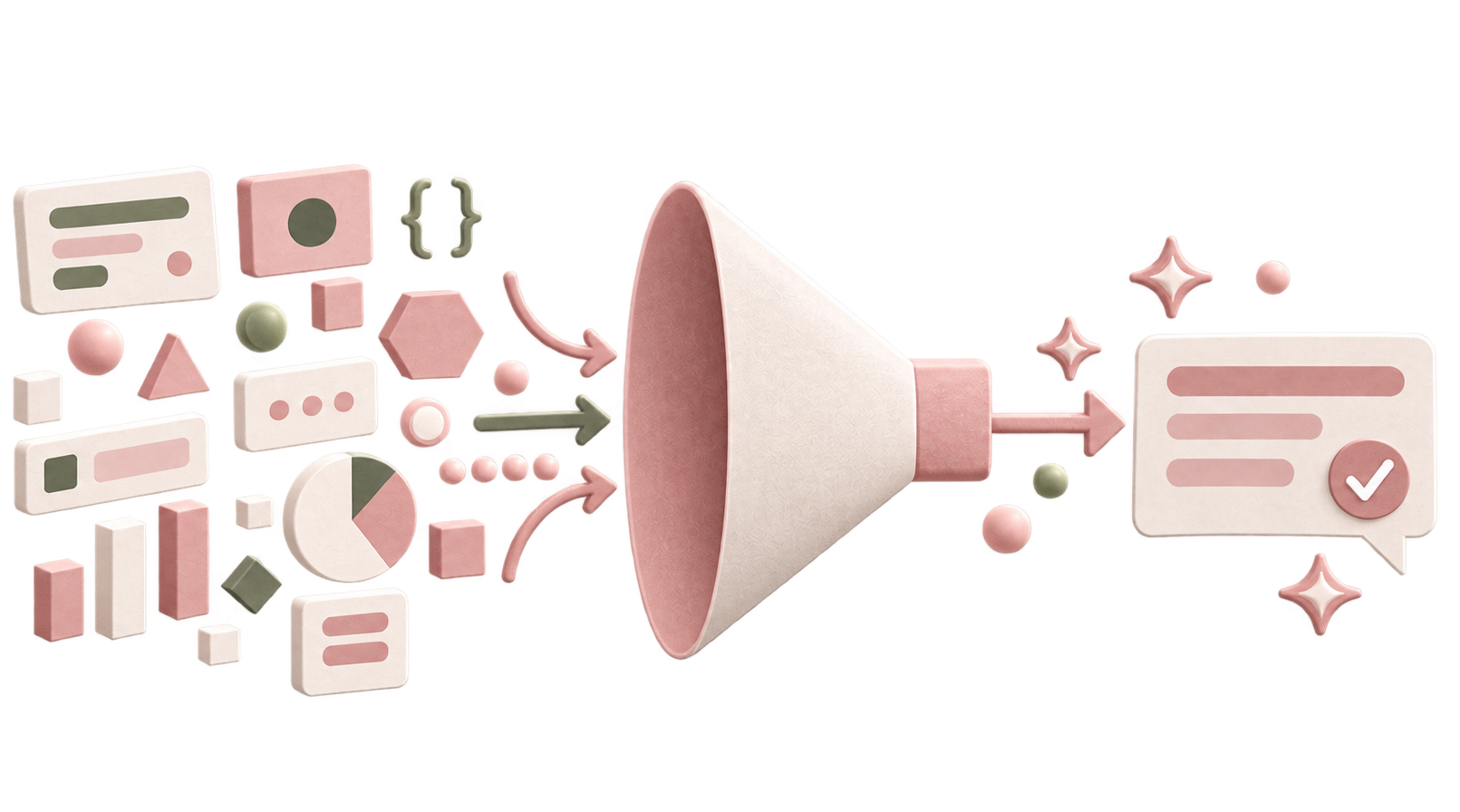
Marketing can't rescue a weak offer.
Attention can get more people to look. Good marketing can make the value easier to see. But there still has to be something valuable underneath it. The product or service has to hold up after the campaign does its job.
Not everything worth saying belongs in the message.
Most businesses have more true, interesting, important things to say than the audience needs at once. Part of the job is deciding what matters here, what needs proof, and what can wait.
The promise has to survive the attention it earns.
Hooks, trends, urgency, and hype can all help more people notice the work. That's useful. But once you have their attention, the message still has to make sense and the claims still have to hold up. Reach matters more when there's something credible behind it.
Execution is part of the thinking.
A good idea can still get lost somewhere between the meeting and the finished campaign. Timelines, reviews, missing inputs, handoffs, and all the less glamorous details matter too. The work isn't finished when the idea gets approved.
I'm useful in the parts that don't fit neatly into one job description.
My range isn't the absence of a specialty.
A lot of my value comes from being able to get inside a complicated business, figure out what the marketing needs, and follow the work wherever it goes from there.
Sometimes that's messaging or content. Sometimes it's campaign execution. Sometimes it's getting several stakeholders on the same page, coordinating the moving parts, or solving something I wouldn't have considered part of my toolkit a few years ago.
- Product depth
- Learn the terminology, documentation, use cases, and technical details well enough to work independently instead of constantly handing the thinking back.
- Messaging & content
- Work out what matters to the audience and turn the product knowledge into copy, content, email, or a clearer story.
- Campaign execution
- Carry the idea beyond the brief into the assets, workflows, reviews, coordination, and details that make the campaign happen.
- Cross-functional work
- Pull together input from product, sales, compliance, leadership, agencies, or other stakeholders without expecting them to solve the marketing problem for me.
- Something outside my old toolkit
- Use AI to research, analyze, troubleshoot, prototype, and create things I couldn't have taken nearly as far on my own a few years ago.
Range still needs judgment.
I can learn a technical product without becoming its engineer and understand a regulated category without becoming its lawyer. When something genuinely requires specialist authority, I know to involve it. The rest is mine to figure out.
AI works the same way for me. It has widened what I can do on my own. My judgment still decides what to trust, what to change, what needs more work, and when the job genuinely needs deeper expertise.
The environment matters too.
Calm doesn't mean slow. I'm comfortable with fast-moving work. I just don't do my best work in environments where everything is urgent, every decision needs a meeting, or stress is treated as a normal way of operating.
I tend to thrive where priorities are clear, meetings are purposeful, and people trust each other to get on with the work.
In their words
She's exactly the kind of person I dreamed of hiring. Her first draft needed almost no revisions. She instantly nailed the tone, the message, and the goal. That's why I appointed her as the team's copywriting trainer.
I've had the pleasure of working with Mariane for over seven years. She doesn't just write for the sake of writing. She crafts stories that inspire action and, more importantly, convert. Creative and results-driven, and a true asset to any team.
Her knack for crafting compelling content and copy that resonates with our audience has directly translated into increased customer engagement and sales conversions.
An absolute pleasure to have as part of the team, consistently positive, reliable, and successful in all areas of the business she has worked in.
Get to know me better
I'm based in Makati, where I share a desk with my dog Taifuu, whose name means "typhoon" in Japanese because she was rescued during one. I read a lot of Brandon Sanderson, watch a lot of movies, and have a weakness for stories that make huge, complicated worlds feel easy to enter.
That is what I want good marketing to do too. Give people the context they need, leave out what they don't, and trust them to understand without making them do mental gymnastics.


My hours overlap naturally with Australian teams, and I can make room for occasional calls with US teams. I'm not available for permanent graveyard shifts, and I prefer async-friendly work with fewer, more useful meetings.
Where persistent thoughts become paragraphs
Mostly marketing, occasionally stories, and sometimes whatever has been occupying too many browser tabs in my head.
Read on Substack ↗
You can see the thinking even when you can't see the work.
A lot of my work was created in-house or through agencies, so the finished assets, client names, internal data, and review history aren't always mine to publish.
My portfolio stays inside those boundaries. Where I can't show the finished piece, I show what I can responsibly share instead: the problem I was working through, what I owned, the decisions I made, what changed, and what I'd do differently now.
Message me for the private portfolioFor the right conversation.
If you think my experience could help your team, send me a note about the role, the work, and where you need more clarity or momentum.